
Soil and agronomic study (optional wetland delineation)
This study provides a comprehensive soil and agronomic assessment of the site to evaluate its potential, constraints and suitability for an agrivoltaic project.
It combines field investigations, laboratory analyses and soil mapping, with optional wetland delineation based on soil criteria.
Microclimate study and assessment of impacts on agricultural production (yield and animal welfare)
This study characterises the microclimatic changes caused by the agrivoltaic installation compared with open-field conditions, then quantifies their impact on field crop yields or grassland forage production.
It also assesses the effects on animal welfare through the thermal comfort provided by shade, including reduced heat stress and the temperature-humidity index (THI).
Pre-feasibility study
This early-stage scoping study assesses the overall feasibility of the agrivoltaic project before more detailed analyses are undertaken.
It considers agricultural, soil and climate, technical, economic, local planning and regulatory factors to identify the project’s strengths, risks and conditions for success.
Strengthening the agricultural project
This service consolidates the agricultural project following the pre-feasibility phase, strengthening its robustness, technical consistency and acceptability.
It develops an optimised version of the agricultural project that takes account of site constraints, agronomic objectives and the regulatory requirements for agrivoltaics.
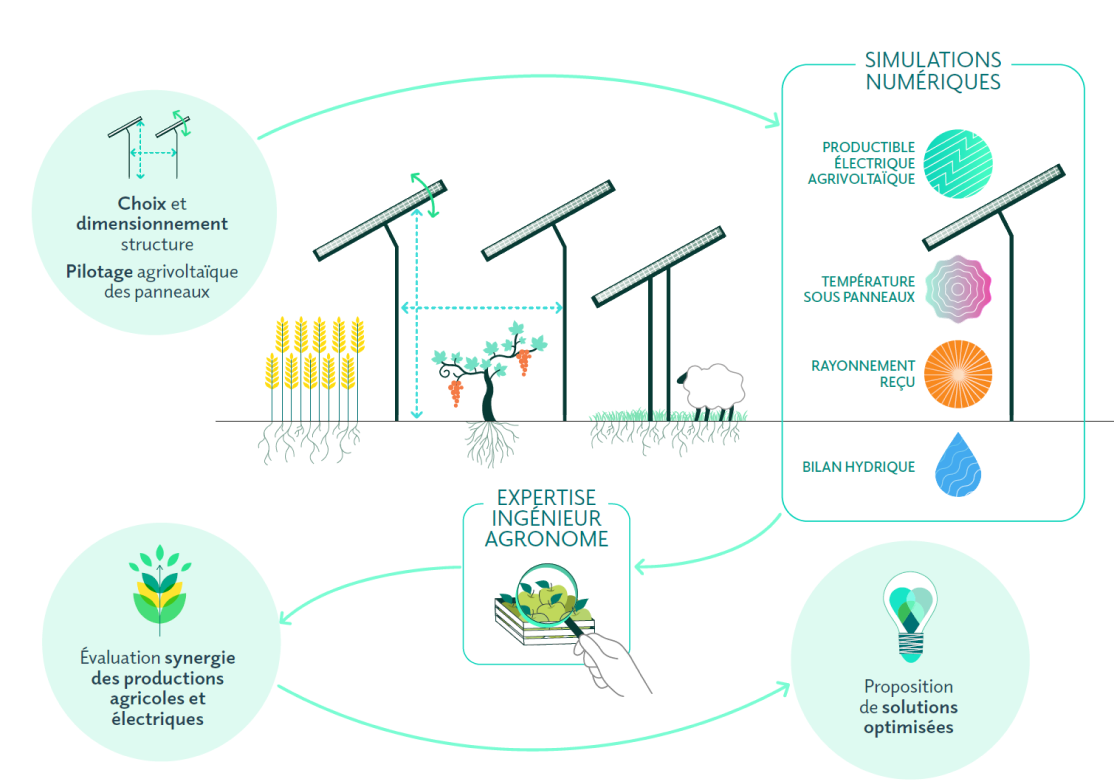
Optimising technical choices and assessing agrivoltaic panel control
This study compares technical configurations and panel control strategies to identify the best-performing agrivoltaic solution for agricultural and energy objectives.
It uses microclimate and energy yield simulations to inform decisions on sizing, structure and panel operation.
Agricultural synergy study
This study quantifies the expected agronomic benefits of the agrivoltaic project by comparing conditions beneath the panels with a control area, under current and future climate conditions.
It analyses the effects on radiation, temperature and water resources, together with their potential consequences for yield, quality, animal welfare and the project’s regulatory compliance.
Technical and economic study
This study measures the technical and economic effects of the agrivoltaic project on the farm by comparing a baseline situation with the situation after implementation.
It analyses the impacts on farming practices, yields, costs, margins and economic resilience to provide an objective assessment of project viability and support regulatory applications.
Preparation of the APER technical note (PC51)
This service involves preparing the agrivoltaics technical note submitted with the planning permission application.
It brings together, in a structured document, the supporting evidence needed to demonstrate the project’s compliance with the French Energy Code, the French Urban Planning Code and the regulatory framework applicable to agrivoltaics.
Institutional and regulatory support for agrivoltaic projects
This service supports the project approval process by assisting with discussions with institutional and agricultural stakeholders.
It includes preparing meetings with the authorities reviewing the application, helping to strengthen the project’s credibility, anticipate objections and develop a tailored case in support of the project.
Preparation of the preliminary agricultural study (EPA)
This preliminary agricultural study analyses the project’s effects on the local agricultural economy and addresses the regulatory obligations applicable to agrivoltaic projects.
It describes the project, establishes the baseline conditions in the area, assesses potential impacts on agricultural sectors and, where necessary, defines avoidance, mitigation and compensation measures.